.png)
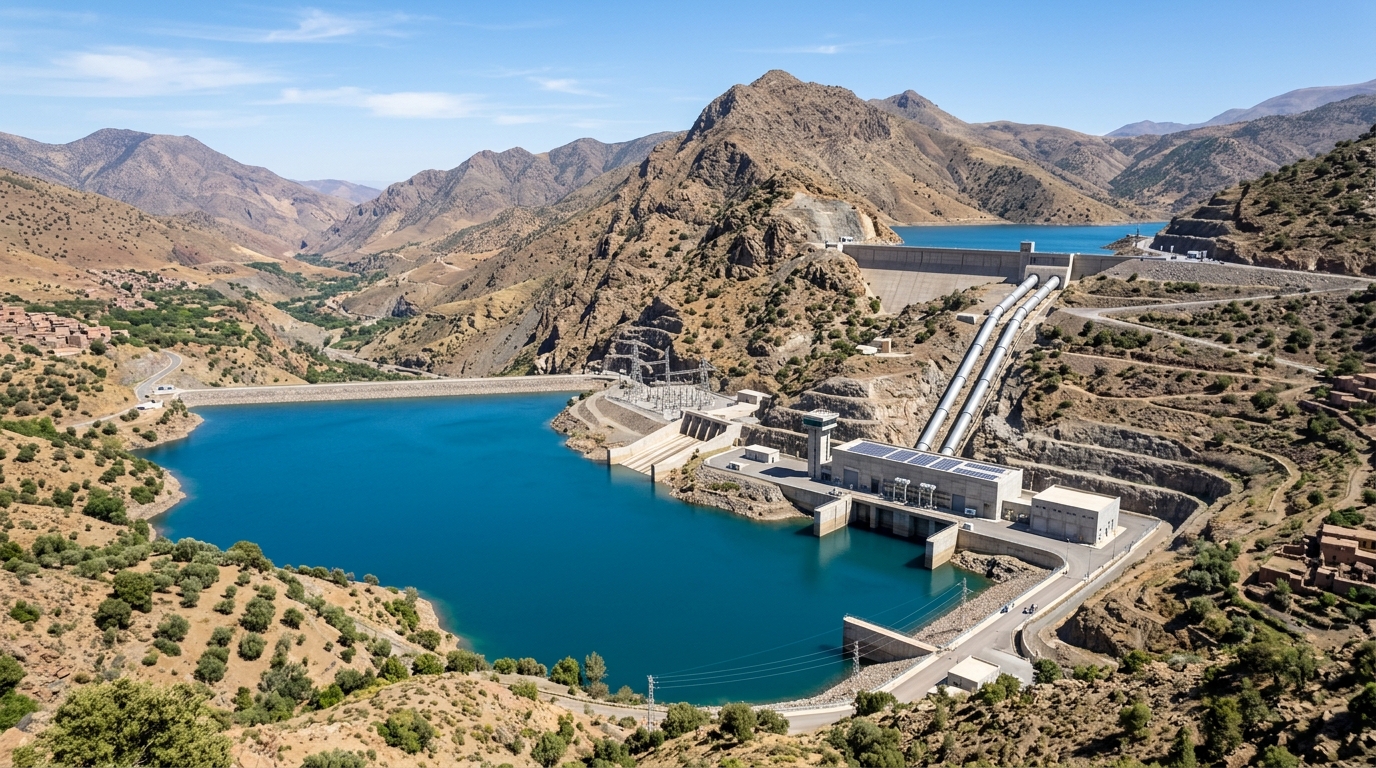
On July 1, 2026, the World Bank Board approved $265 million in financing to support Morocco's Ifahsa Pumped Hydropower Storage Project. This is not only one of Morocco's most ambitious clean energy infrastructure investments to date, but also the largest facility of its kind on the African continent. The project's core figures are striking: 300 megawatts of installed capacity, 1,500 megawatt-hours of energy storage, 1.7 million tons of CO₂ emissions avoided annually, and 820 direct jobs created each year during construction. But more significant than the numbers is the fact that Ifahsa is offering a replicable financing and technical model for integrating renewable energy at scale across Africa.
1. Project Overview: A "Rechargeable Mountain"
Technical Principles and Location
The Ifahsa project is located near the northern Moroccan city of Chefchaouen, about 14 kilometers from the city center, and will connect to Morocco's 400-kilovolt high-voltage transmission network. Its operating principle is intuitive and efficient: when solar and wind generation exceeds demand, surplus electricity is used to pump water to an upper reservoir; when electricity demand rises, the water flows back through turbines to generate power on demand.
The project features two 150-megawatt reversible pump-turbine units, with a total installed capacity of 300 megawatts and a storage capacity of 1,500 megawatt-hours. According to World Bank project documents, the facility will absorb approximately 690 gigawatt-hours of electricity annually and generate approximately 550 gigawatt-hours per year, with a round-trip efficiency of 80%.
Financing Structure
The project's total investment is approximately $500 million. The World Bank financing package consists of three components: International Bank for Reconstruction and Development (IBRD) loans, concessional financing from the Clean Technology Fund (CTF), and grants from the Livable Planet Fund. The African Development Bank participates as a co-financier, and the Moroccan National Office of Electricity and Drinking Water (ONEE) is responsible for project implementation.
2. Quantitative Evidence: A Dual Ledger of Environmental and Economic Benefits
Carbon Reduction and Fossil Fuel Displacement
The Ifahsa project is expected to replace approximately 3 terawatt-hours of fossil fuel generation annually, avoiding 1.7 million tons of CO₂ emissions. This reduction is nearly double the annual emissions avoided by Morocco's existing Noor Ouarzazate solar complex (approximately 900,000 tons).
Grid Flexibility and Renewable Energy Integration
The project will support the integration of at least 1 gigawatt of new solar and wind energy into the national grid. World Bank analysis further specifies that Ifahsa can support the integration of 400 megawatts of solar and 600 megawatts of wind, while reducing curtailment by approximately 340 gigawatt-hours per year. The significance of 1,500 megawatt-hours of storage capacity lies in this: it provides a clean source of electricity for Morocco's nighttime peak demand—when the sun sets and wind output fluctuates, Ifahsa releases water stored during the day.
Private Capital Mobilization
The World Bank expects the project to mobilize approximately $1 billion in private investment. The logic of this leverage effect is clear: grid-scale storage removes the biggest obstacle to renewable energy development—intermittency—thereby providing private investors with a predictable environment for electricity offtake.
3. Social Impact: Jobs, Competitiveness, and Energy Security
Direct and Indirect Employment Effects
The 820 direct jobs per year during construction are the project's most visible social return. But the indirect employment effects may be even more substantial. Morocco's Minister of Energy Transition and Sustainable Development, Leila Benali, has previously noted that the country's renewable energy sector currently provides approximately 75,000 direct jobs, a figure expected to rise to 100,000 by 2030. The 1 gigawatt of renewable energy expansion supported by Ifahsa will create additional employment opportunities both within and beyond the energy sector.
Improved Electricity for Households and Businesses
The World Bank explicitly states that the project will provide Morocco's electricity consumers—including households and businesses—with more reliable and cleaner electricity supply. For residents of Chefchaouen and the northern region, this means fewer outage risks and more stable voltage quality. For businesses, particularly export-oriented manufacturers, low carbon electricity supply is becoming a prerequisite for accessing international markets. The World Bank emphasized in its statement that Moroccan businesses will "enhance their competitive position in international markets that increasingly demand low-carbon supply chains" by gaining access to cleaner electricity.
Structural Relief from Energy Dependence
Morocco relies on imports for approximately 87% of its energy needs. Every megawatt of renewable energy integrated with Ifahsa's support marginally weakens this dependence. More critically, the dispatchable clean electricity provided by pumped storage upgrades renewable energy from an intermittent supplementary source to a reliable source capable of bearing baseload and peak-shaving responsibilities. This shift is of strategic importance to Morocco's energy security.
4. The Bigger Picture: Ifahsa's Place in Morocco's Energy Strategy
Alignment with ONEE's Storage Strategy
Ifahsa is not an isolated project. It is a core component of ONEE's goal to develop 1 gigawatt of pumped storage by 2030. Before it, the 350-megawatt Abdelmoumen pumped storage plant was commissioned in 2024; the 362-megawatt El Menzel project is under development. At the same time, ONEE plans to procure 800 megawatts/1,600 megawatt-hours of battery storage systems between 2026 and 2030.
Alignment with Morocco's Renewable Energy Targets
Morocco aims to raise renewable energy's share of installed capacity to 52% by 2030. As of the end of 2025, Morocco had approximately 5.5 gigawatts of operational renewable energy capacity, including roughly 1.3 gigawatts of solar, 2.4 gigawatts of wind, and 2.1 gigawatts of hydropower. Peak electricity demand rose from approximately 7.6 gigawatts in 2024 to 8.2 gigawatts in 2025 (an 8% increase), and is projected to reach 11.3 gigawatts by 2030. What Ifahsa addresses is precisely the most difficult part of this growth curve: how to make a high share of renewable energy technically feasible and economically affordable.
Conclusion
The core value of the Ifahsa project lies in proving that large-scale clean energy infrastructure in Africa is financeable, buildable, and operable. The collaboration model among the World Bank, the African Development Bank, the Clean Technology Fund, and the Moroccan government offers an institutional template for other African countries facing similar grid flexibility challenges.
As Ahmadou Moustapha Ndiaye, World Bank Divisional Director for the Maghreb and Malta region, put it, Ifahsa "embodies the kind of transformative partnership we strive to build—bringing together multilateral institutions and national authorities, mobilizing capital, and investing in infrastructure that delivers environmental, social, and economic dividends."
820 jobs, 1.7 million tons of carbon avoided, $1 billion in private investment—these figures alone are persuasive enough. But Ifahsa's true legacy may lie in the answer it provides to a more fundamental question: what kind of infrastructure does Africa's energy transition actually require? The answer: infrastructure capable of converting variable renewable energy into reliable electricity. Ifahsa is ultimately the concrete realization of that answer.